Early Signs of Crankshaft Damper Failure and the Mount Brackets It Damages
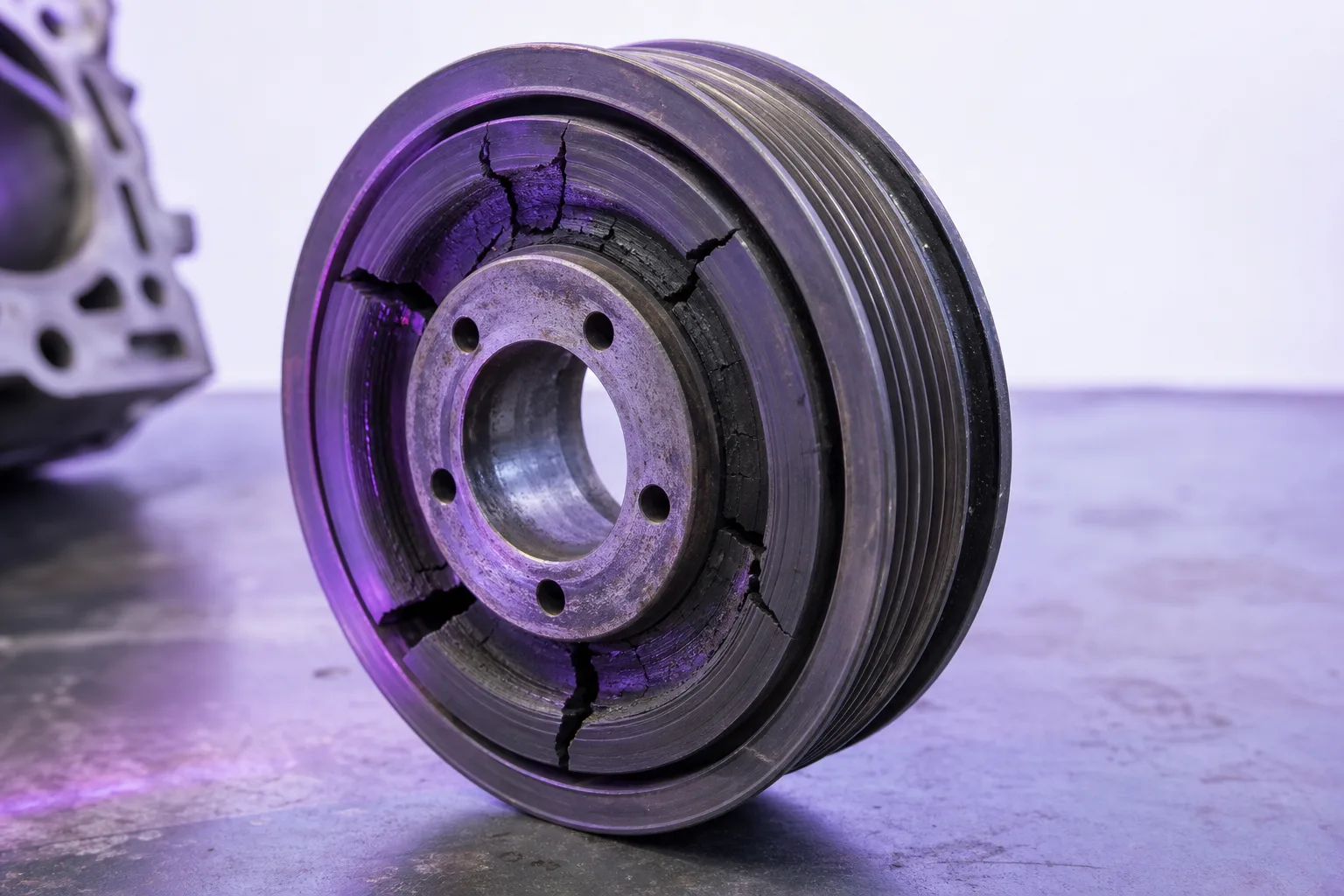
The harmonic damper sits at the front of the crankshaft, absorbing torsional vibration from combustion cycles. When its rubber elastomer degrades, that energy does not disappear — it travels through the crankshaft, mount brackets, accessory belts, and eventually the coolant pump housing.
How a Harmonic Damper Works
The damper consists of a metal hub bonded to an outer ring through a rubber layer. The rubber allows the outer ring to oscillate out of phase with crankshaft pulses, canceling destructive resonance at specific RPM ranges. Heat, oil contamination, and age harden the rubber until it cracks or separates from the hub — at which point damping capacity drops sharply.
Early Warning Signs Owners Notice
- A rhythmic vibration at idle that increases with engine speed, felt through the steering wheel or floor pan
- Unusual belt squeal that persists after belt replacement
- Visible wobble in the crankshaft pulley when the engine is running
- Cracking or bulging in the damper rubber visible during a visual inspection
- Accessory bracket bolts that loosen repeatedly despite proper torque
Downstream Damage We Document
Engine Mount Bracket Fatigue
Excess torsional vibration transfers to the engine mounts. Over time, bracket welds develop micro-fractures that propagate until the mount allows excessive engine movement. We inspect bracket geometry and rubber mount compression whenever replacing a damper — not just the damper itself.
Accessory Drive Components
Alternator and power steering pump bearings absorb vibration that the damper should have canceled. Premature bearing wear on multiple accessories simultaneously is a strong indicator of damper degradation rather than individual component failure.
Coolant Pump and Front Cover Stress
On engines where the water pump mounts to the timing cover, harmonic pulses can loosen gasket seals and create seepage paths that mimic head gasket failures. Tracing the seepage source before authorizing major work saves significant unnecessary expense.
Inspection and Replacement Standards
We measure pulley runout with a dial indicator and compare rubber hardness against specification where service data exists. Replacement always includes new crankshaft bolt — most manufacturers specify single-use stretch bolts that cannot be reused. Torque is applied in stages with the flywheel locked to prevent crankshaft rotation.
Why Timing Matters
Replacing a damper at the first sign of rubber separation costs a fraction of repairing mount brackets, belt tensioners, and coolant pump seals that fail months later. Our wear interconnection maps show clients exactly which adjacent components are already absorbing excess stress — so they can prioritize before a breakdown occurs.