Why Knock Sensor Codes Often Point to a Bigger Network Problem
A knock sensor code appears on the scan tool. The instinct is to replace the sensor. In our Jacksonville workshop, that approach resolves the fault less than half the time — because detonation signals rarely originate from a failed sensor alone.
What the Knock Sensor Actually Monitors
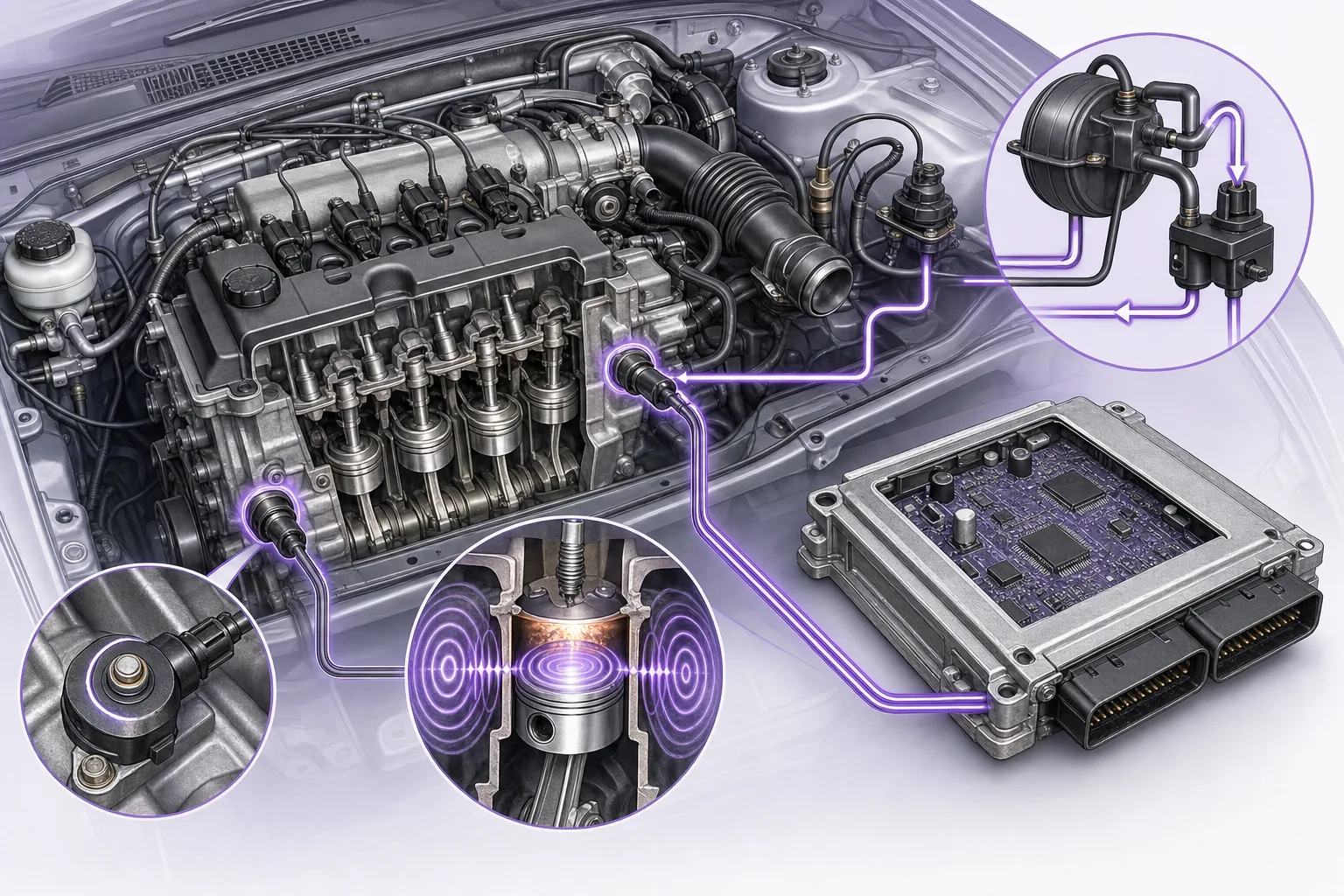
Knock sensors detect abnormal combustion — pre-ignition or detonation that produces characteristic vibration frequencies in the engine block. The ECU uses this input to retard ignition timing and protect pistons and cylinder heads. When the sensor reports persistent knock activity, the computer stores a fault and may enter limp mode to prevent damage.
The critical insight is that the sensor is a reporter, not the source. It tells you that combustion is unstable somewhere in the cylinder. Finding why combustion became unstable requires tracing upstream through air, fuel, and timing subsystems.
Common Upstream Causes We See in Practice
Vacuum System Leaks
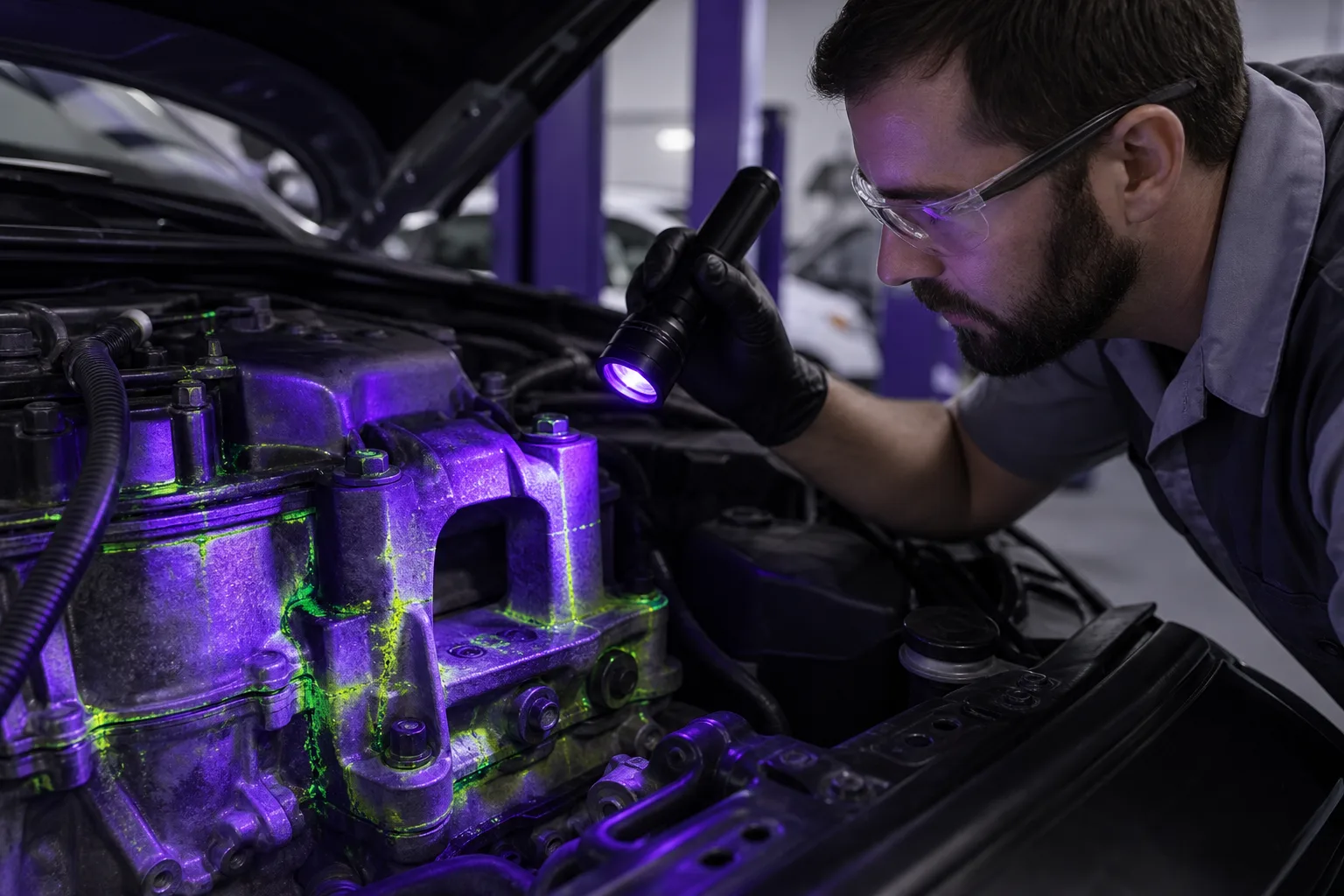
Unmetered air entering the intake throws off the air-fuel ratio and creates lean conditions that promote detonation. A hairline crack in a vacuum line near the throttle body can produce the same knock code as a failed sensor. We smoke-test the entire intake manifold and inspect PCV routing before touching the sensor itself.
Fuel Trim Irregularities
Long-term and short-term fuel trim values reveal whether the engine is running lean or rich relative to target. Persistent positive short-term trim combined with knock activity often indicates a vacuum leak or MAF contamination. Negative trim with knock may suggest injector flow problems or fuel pressure irregularities.
Throttle Body Calibration Drift
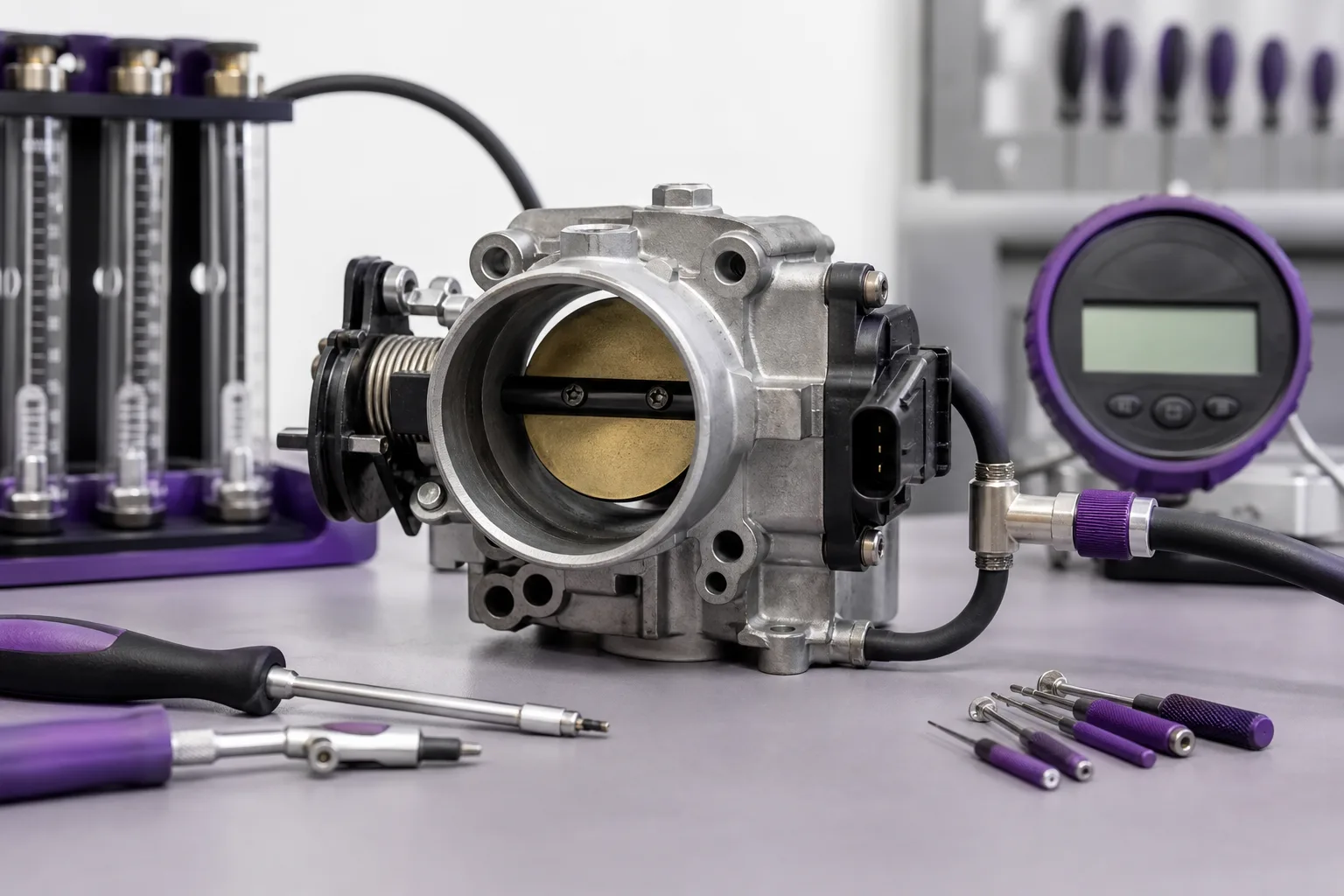
An improperly calibrated throttle body affects idle air control and manifold vacuum balance. When adaptive values drift after a previous repair, the ECU may compensate in ways that mask the root issue until load increases — at which point knock returns under acceleration.
Our Systematic Diagnostic Sequence
- Pull all stored and pending codes; note freeze-frame RPM and load data at time of fault.
- Review fuel trim, MAF grams-per-second, and STFT/LTFT at idle and 2500 RPM.
- Smoke test intake and vacuum circuits; inspect throttle body gasket and IAC passage.
- Scope knock sensor signal under load — compare bank-to-bank if dual sensors exist.
- Replace sensor only after upstream systems test within specification.
When Sensor Replacement Is Warranted
Sensors do fail — typically from heat cycling, moisture intrusion, or physical damage during prior work. Oscilloscope analysis showing erratic or flatlined signal while upstream systems are verified clean confirms replacement. We always torque to specification and route wiring away from exhaust heat shields to prevent repeat failure.
The Takeaway for Vehicle Owners
Treat a knock code as a system alert, not a parts order. Ask your technician what upstream checks were performed before the sensor was replaced. If the answer is none, you may be paying for a repeat visit when the underlying lean condition resurfaces under highway load.