How to Tell Oil Seepage from a Leak — and Why the Distinction Matters
An oily valve cover or timing cover triggers alarm — and an expensive gasket quote. But much of what owners call a leak is actually seepage: slow migration of oil through porous gasket material or mating surfaces that never reaches drip rate. Confusing the two leads to unnecessary repairs.
Defining Seepage vs. Active Leak
Seepage is oil that migrates through a joint without pressurized escape. It creates a wet or dusty-oily surface but produces no drops on the ground over a parked period. Active leak means pressurized oil escaping a failed seal — visible drips, puddles, or measurable oil loss between services.
Diagnostic Methods We Use
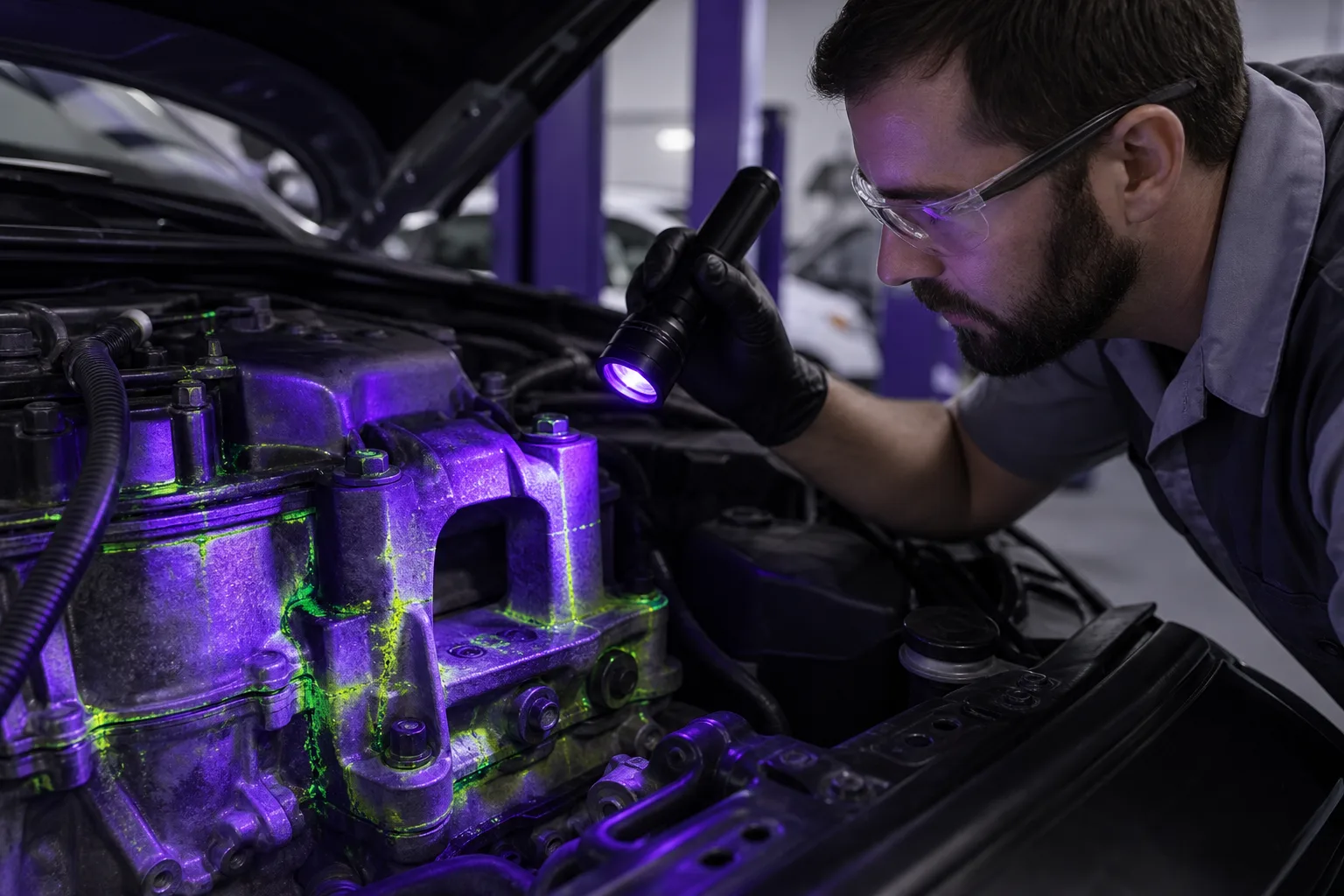
UV Dye Tracing
We add UV-reactive dye to the crankcase and run the engine to operating temperature. Under black light, active leak paths glow bright green along precise routes — from a cam seal, oil pressure sensor port, or degraded mount bracket gasket. Seepage areas show diffuse haze without a concentrated trail.
Oil Pressure Testing
A mechanical gauge connected to the oil gallery verifies that pressure holds within specification at idle and 2500 RPM. Pressure drop under load combined with external oil appearance confirms an active seal failure rather than cosmetic seepage.
Mount Bracket Flex Analysis
Engine movement under torque loads flexes gasket joints at the timing cover and oil pan interface. A degraded mount bracket allows excess engine rock, opening seepage paths that appear as leaks. We measure mount deflection before recommending gasket replacement — fixing the mount often stabilizes the joint without major disassembly.
When Seepage Requires Action
Not all seepage is harmless. Oil migrating toward exhaust manifolds creates smoke and fire risk. Oil on electrical connectors degrades insulation. We map seepage direction and rate against adjacent components to determine whether monitoring is sufficient or intervention is required.
Common Misdiagnosis Patterns
- Replacing valve cover gaskets when oil originates from a cam seal above
- Condemning oil pan gaskets when seepage tracks from a rear main seal
- Ignoring mount bracket wear that re-opens freshly sealed joints within months
Practical Advice for Vehicle Owners
Before approving major gasket work, ask whether dye tracing or pressure verification was performed. Request photos of the UV trace path. A technician who can show you exactly where oil exits — and whether the mount bracket contributes — is thinking in systems, not selling parts.